
existing within
When I wake up in the morning and the light coming through my curtains isn’t light at all but a grey hum of an overcast sky - It puts an unmistakable weight on my body, that makes it a lot harder to get up out of bed and face the day.
I feel grey clouds on me like the gel coating of flesh on a fresh tomato seed - heavy, gripping and difficult to clean off.
With tomato seeds, the trick is to put them in a jar of water and leave them for a few days, after which the gel will rot and lose grip on the seed. Then it is easy to strain the seed from the gel, dry them out and store them for the coming spring.
For the sky and me I suppose it is much the same, I have to get up, go out, and exist within it until something in my environment gives me levity.
A cup of tea made by Sam, a hug hello from Kirsten, a favour for Steven that helps me feel useful, or a basket full of late season yet sun ripened tomatoes which let me know there is still sun coming through the clouds onto us both.
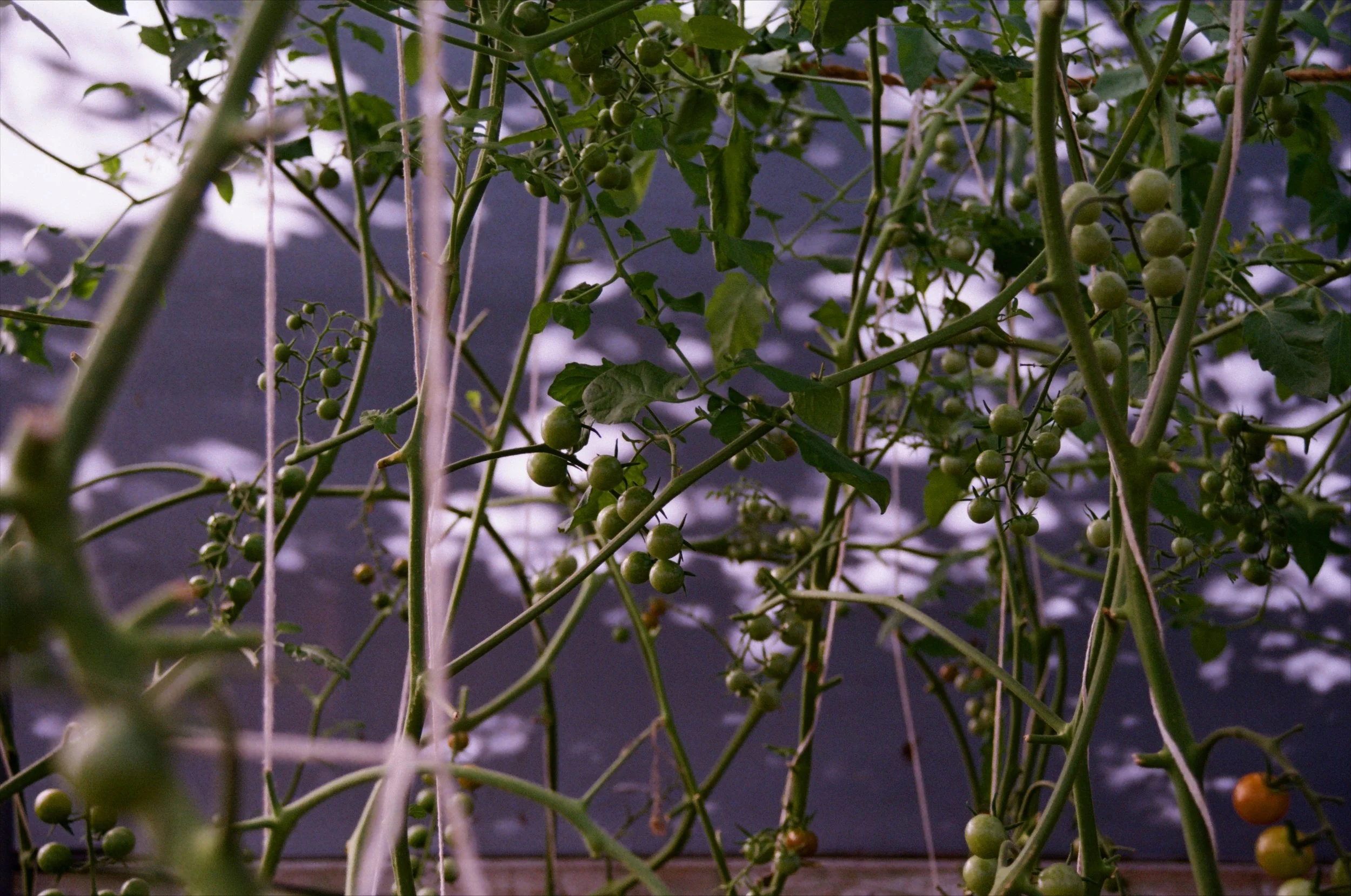
late season cherry tomato plants in the poly tunnel, at this time of year all lower leaves of the plant get stripped to maximise the light that can get through to the ripening fruit
The vertical farm was an old warehouse filled ceiling to floor with low-walled shelves that held trays of cotton wool and seeds which were periodically flooded with a mix of water and synthetic fertiliser.
The output was micro greens, edible flowers, and sticky flytraps, so full that they were no longer yellow. The old warehouse handled the humidity of the operation poorly and so we were also growing a significant amount of black mould.
The seedlings were on a strict schedule when it came to the grow lights they sat under. Duration of light exposure was dictated by scientific knowledge of plants, and the time of day they were switched on was decided by the cost of energy at different times of day.
We also only bothered with the wavelengths of light that meant anything to plants, which meant that when they were on, I would be bathed in a pink glow as I prepared trays, cleaned the floor, stock checked seeds and harvested the greens.
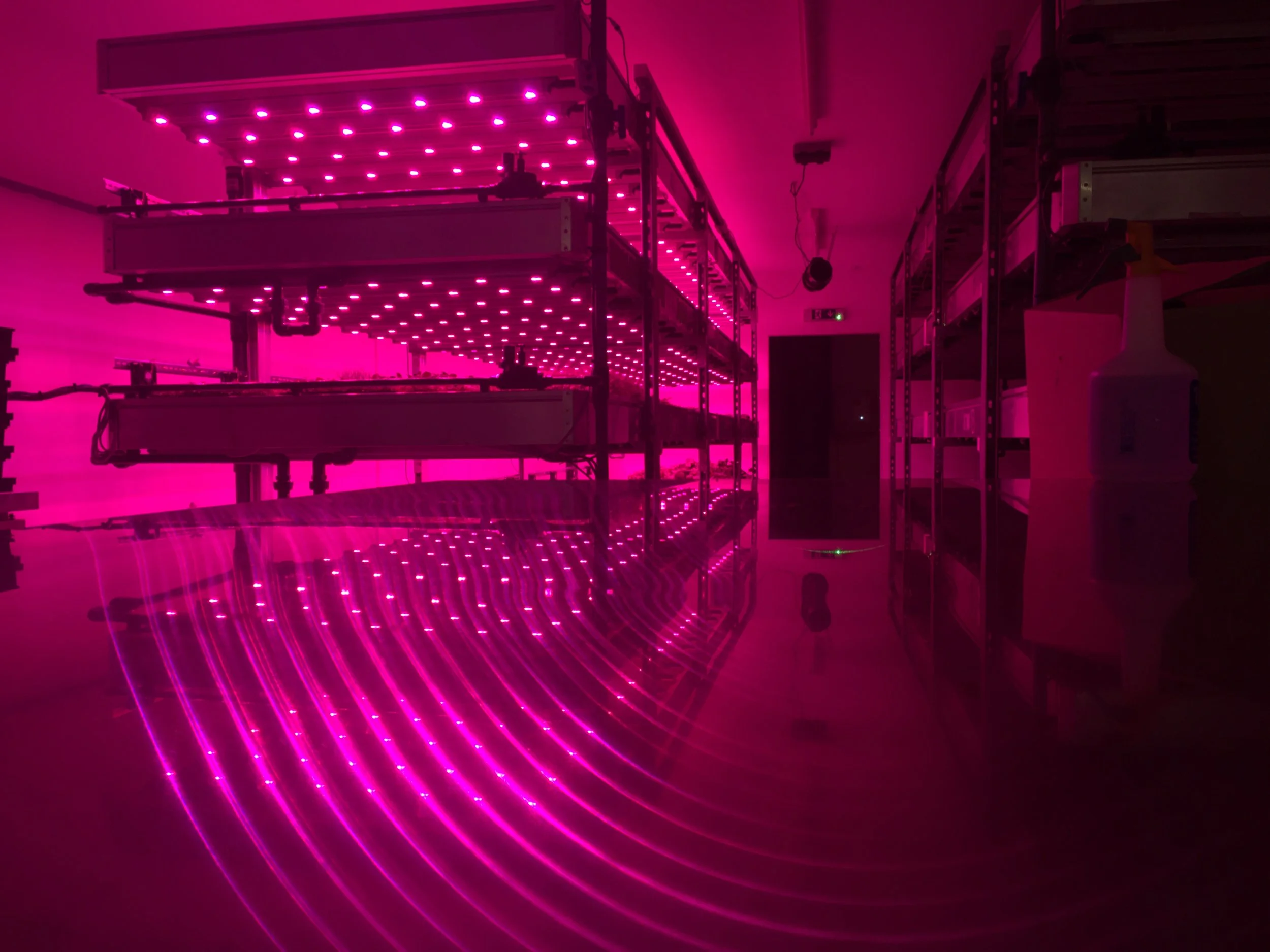
The pink grow lights of a vertical farm, the light along the bottom bent on the surface of a large metal table
I was really interested in vertical and indoor growing as a solution to food miles, growing in small spaces, and as a part of urban agriculture, but it didn’t take me long to decide that something about this farm was not a healthy choice for the people who worked there. The plants themselves didn’t even feel alive.
It was around this time I also started doing sessional work at Spitalfields. Here, growing crops is guided by learning about the systems in nature that already exist, and working within and as a part of them.
Of course, there is still mould and flies, but when you stop trying to exclude everything that wants to be around your crops, you don’t often feel as overrun by any one thing either. And in times when something shows up prolifically, it communicates something to us which hopefully we can affect, and if not, pivot.
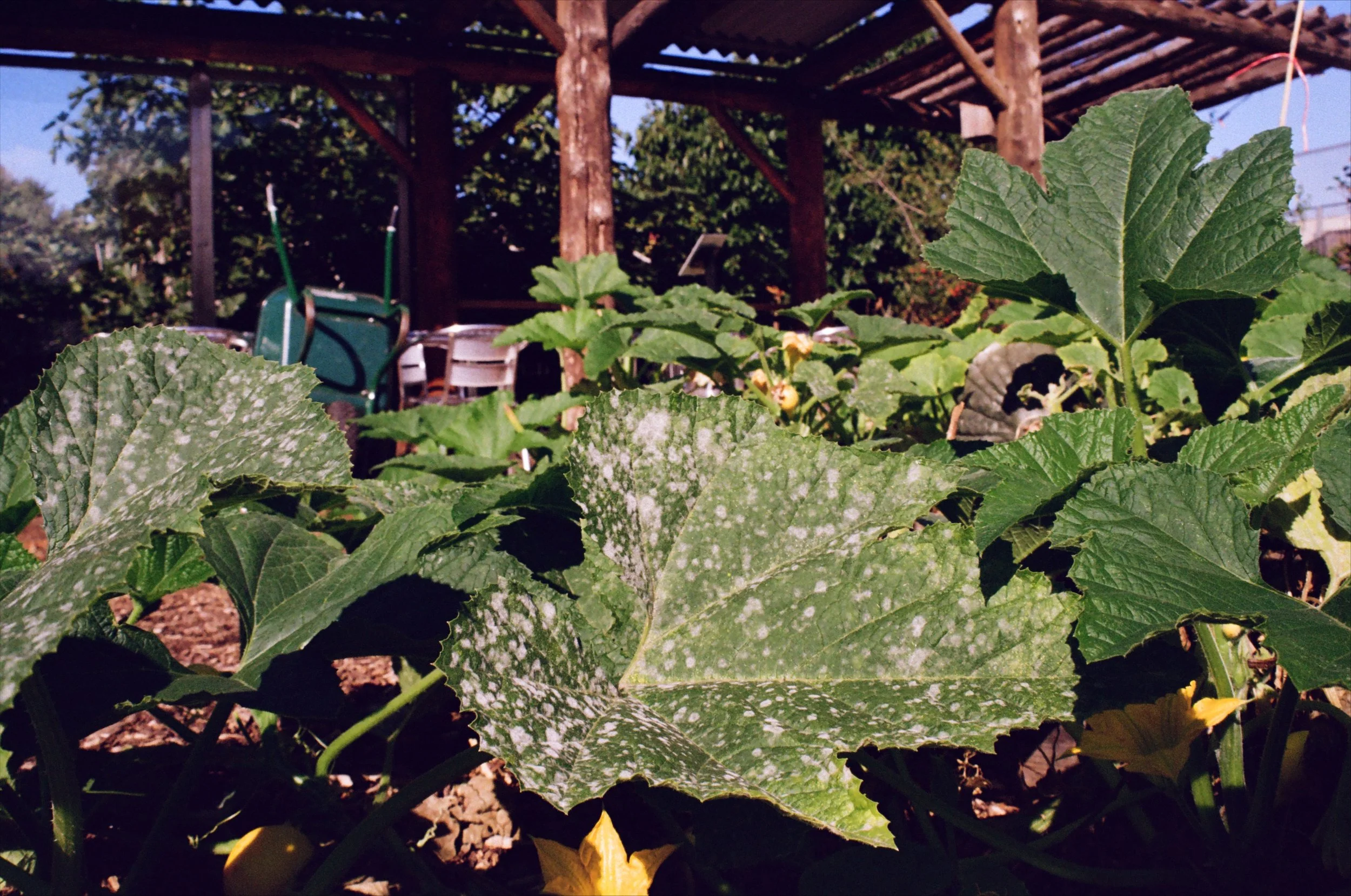
Powdery mildew’s easily identifiable white spots on our courgette bed. We can temporarily aid these plants by removing effected leaves to slow down the spread of the fungal spores in the hopes of eeking a few more courgettes out of them before they die off completely.
Right now, in the beginning of October, cold mornings will suddenly snap into warm lunchtimes where hoodies get ripped off and discarded like litter, forgotten and left behind at the end of the day, resulting in cold walks home from the station as the sun quickly slips away while I ride the metal horse across the river.
This on-off-on-off frustration is happening for a lot of our plants too, during the change in seasons. For example: after endless days of putting dried out pots of parched plants into big trays, so they can sit in an inch of water to act as a reserve for the long hot evenings they spend without someone to tend to them (we work 9-5 here).
I now arrive to swimming pools of rainwater shouting up reflections of the plants at me, smothering the roots of exposure to oxygen (which they need) and leeching the soil of its nutrients.
If I leave the plants in here too long, they will suffer and likely contract root rot, but the rain is not yet consistent enough for me to swap to a tray with holes. This is the appropriate outfit for the depths of winter, where constant rain can quickly drown out young plants and minimal sun slows down transpiration rates (which is essentially the plant’s need for water).
And so, I tip and hold any such aquatic trays and let the excess water run out.
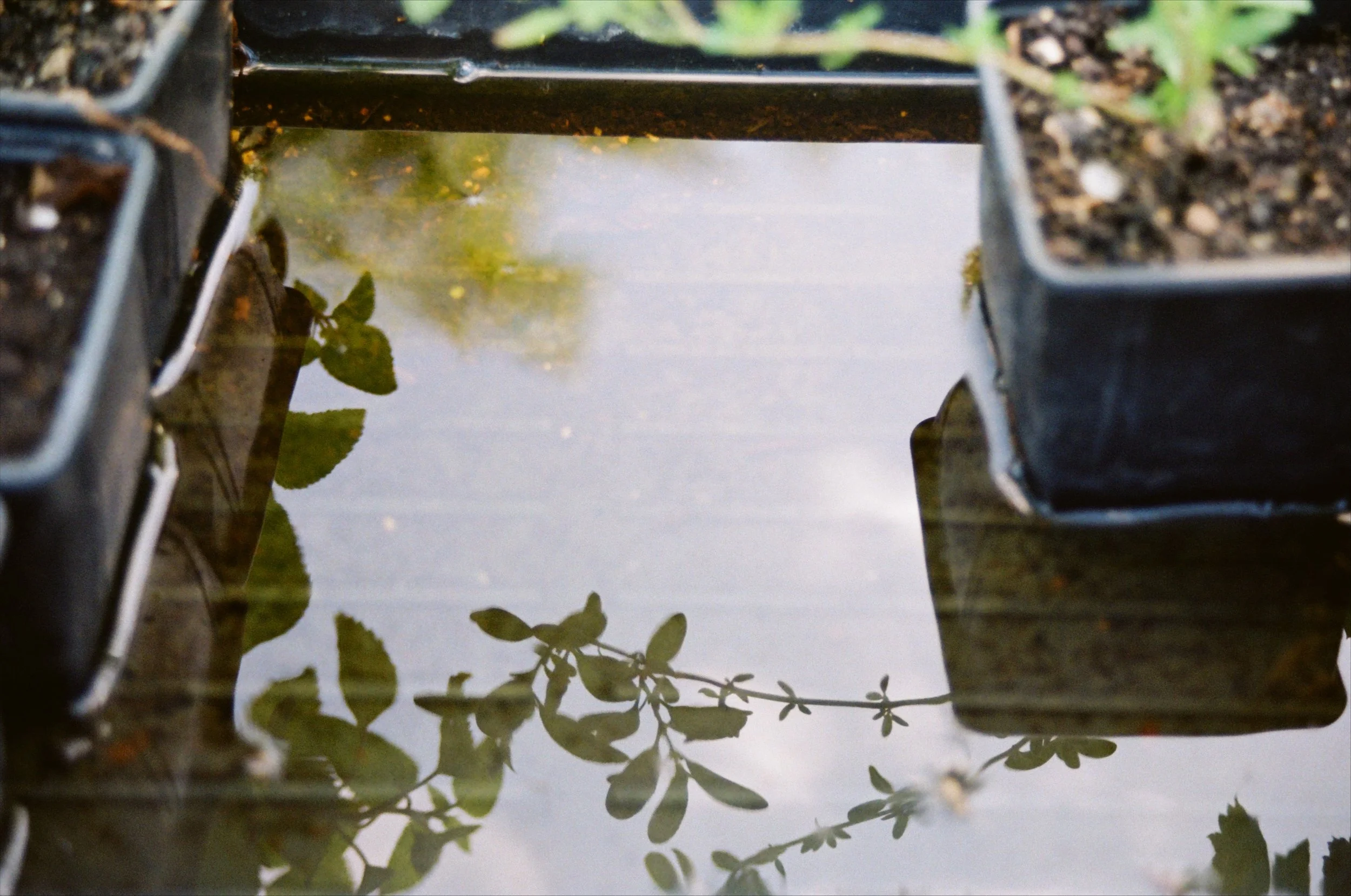
Tray of plants sat in collected rainwater moments before I tipped it out
To mitigate the steady climb of darkness into my evenings and late afternoons on my mood, I try to find brightness in something other than the sun.
Recently I have started learning Sylheti at the house of Annetta, a community space on the other side of brick lane from us.
I arrive at the same time as my teacher, Shamim, and she shows me into the house. She knows I work at the farm so takes me first to the garden, asking me to take a look. A lot of their potted plants stare at me with the unmistakable tiredness of drought. It’s been a very difficult summer for any plant that lives in a pot, and there’s very little advice I can give towards that - other than being diligent with watering or creating some kind of temporary shade where possible.
Shamim then points at a leaf and says,
‘You must know this one, pātā’
‘I do!’
I know this word from people buying various leafy greens at the farm, but particularly in the context of the mustard greens which we grow over winter: Lai pātā.
She picks it and brings it upstairs to the classroom, so she can teach the others this word too.
I feel a bit nervous as I take a seat, but soon, I relax. The air feels close and hugs my tired eyes. The space feels both cozy and drafty. Other language lessons are taking place in the other rooms of the house, offering a nostalgic sense of camaraderie.
At one point, chatter starts to build down below us and Shamim says,
‘It sounds like they are taking a break. Let’s join them.’
So, we filter down the staircase and collect by a large table of biscuits, fruit, crisps, the fixings to make tea, and a big silver urn, a water tower over this edible town.
Once we have each collected some refreshments, we head back up and slowly take our seats around the table.
I watch steam pour up from a cup of tea in front of Shamim as she begins to tell a story conversationally. She is recalling the story her grandfather told her about how he made his journey to England.
He came via boat, as a seaman below deck shovelling coal into the boats engine. He and his shipmates were mostly confined to the hull, and so as you can imagine conditions were not ideal.
The exposed joists and creaking staircase in the house of Annetta help transport me onboard this new friend’s ship.
Upon reaching a coastline at night, before the boat was due to dock, he snuck into the ship’s kitchen and took a large bulbous glass container, stuffing clothing inside.
He crept above deck and jumped into the blackness of the night, and with his improvised floating device swam through the wet cold salt of the sea to land.
On the beach the container could be unpacked and a smart shirt and trousers put on, then he could walk into the nearest town without too much suspicion.
We sat in the story for some time, before conversation went into the politics of movement today. A moment of grief was held for those recently and historically lost to the sea though their own version of her grandfather’s story.
I think some people want to operate countries like a vertical farm, with some impossible goal of controlling life through keeping things out, but a space truly like that just wouldn’t be enjoyable to live in. It certainly wasn’t enjoyable to work in.
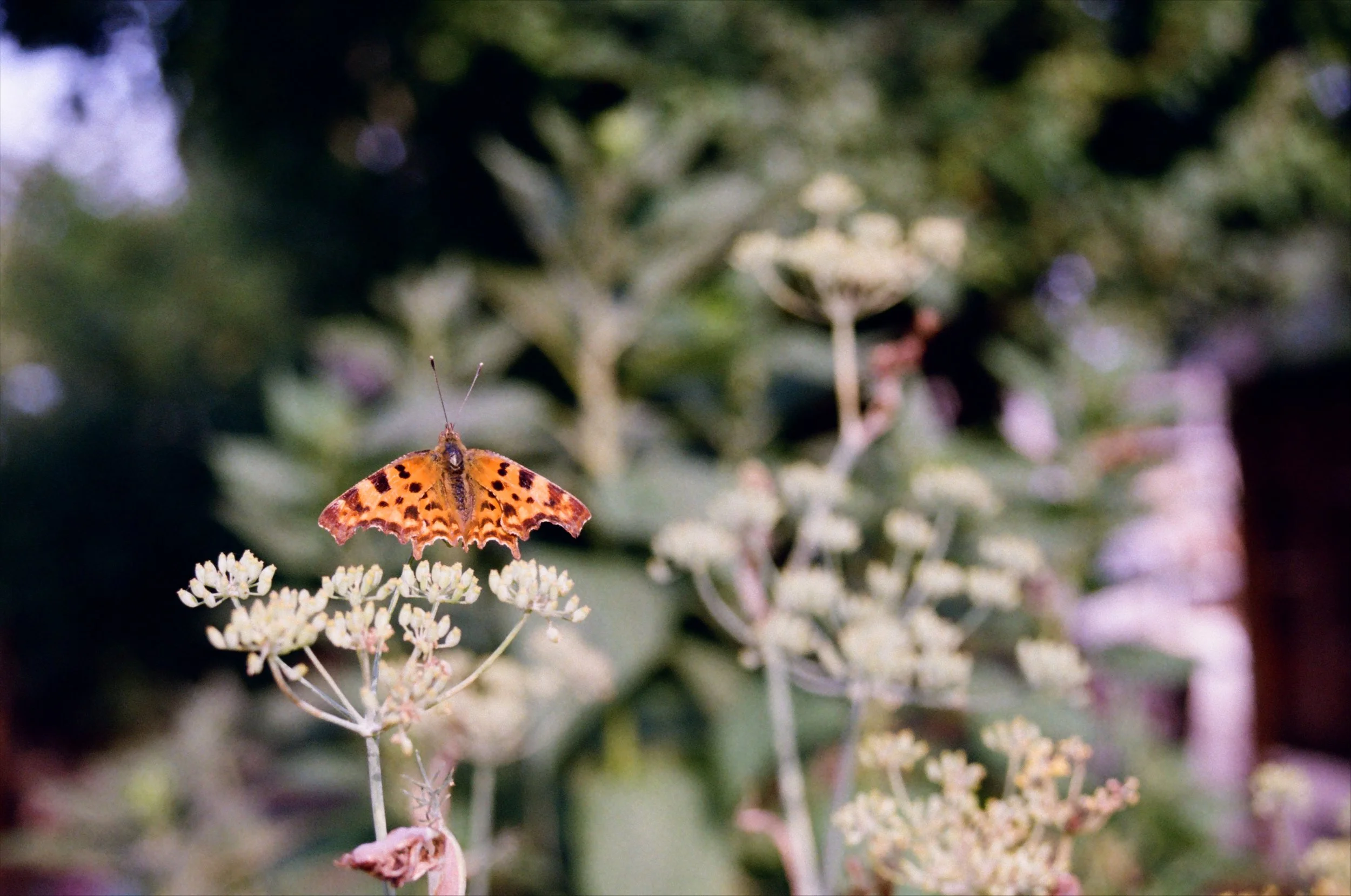
nice picture of a butterfly
Words a photos by Izzy