nothing is wasted if its shared
I grew up in a house of second hand and passed down items, often as good as new, but more favourably they came into my life carrying a quiet story of a past life, marred by the patina of time.
There was the white polar bear from Deptford market whose fur was slightly matted from the wash, and whose head was attached in a way that made it so he was always looking to the left.
A circular wooden hand carved table that belonged to my mum’s nana who I got to know very well when my boredom led me to the task of cleaning it’s deep groves one afternoon. I traced each line like I was in conversation not only with the person who had carved it but also my great grandmother.
I kneel at the altar of charity shops and second-hand clothing. I feel like I win the lottery each time I pay no more than £4 for a woollen jumper instead of being sucked into a Highstreet conglomerate where you’re asked upwards of £40 for a synthetic reproduction of what clothing should be.
Fast fashion is like the Styrofoam fruit my mum had hanging in the kitchen window- tempting but ultimately just painted plastic posturing as something real.
So, I opt to buy second hand ‘real’ clothing even if it’s damaged because I know my sister will happily mend it for me. Holes made by hungry moths get slowly covered with dashes of contrasting embroidery thread as we sit and watch TV.
If moths want to eat my clothes, that’s probably a good sign.
Much like my jumpers many of the apples on the farm this year have tiny holes in them, which when explored reveal coddling moth larvae. Unfortunately, we can’t patch up these moth holes, but still we collect the fruit and make good of what is left untouched.
Rather than get angry at a moth, I’m trying to unlearn the entitlement I feel to the apple, this way I can feel grateful when they stick to eating the core and are sharing the rest with me.
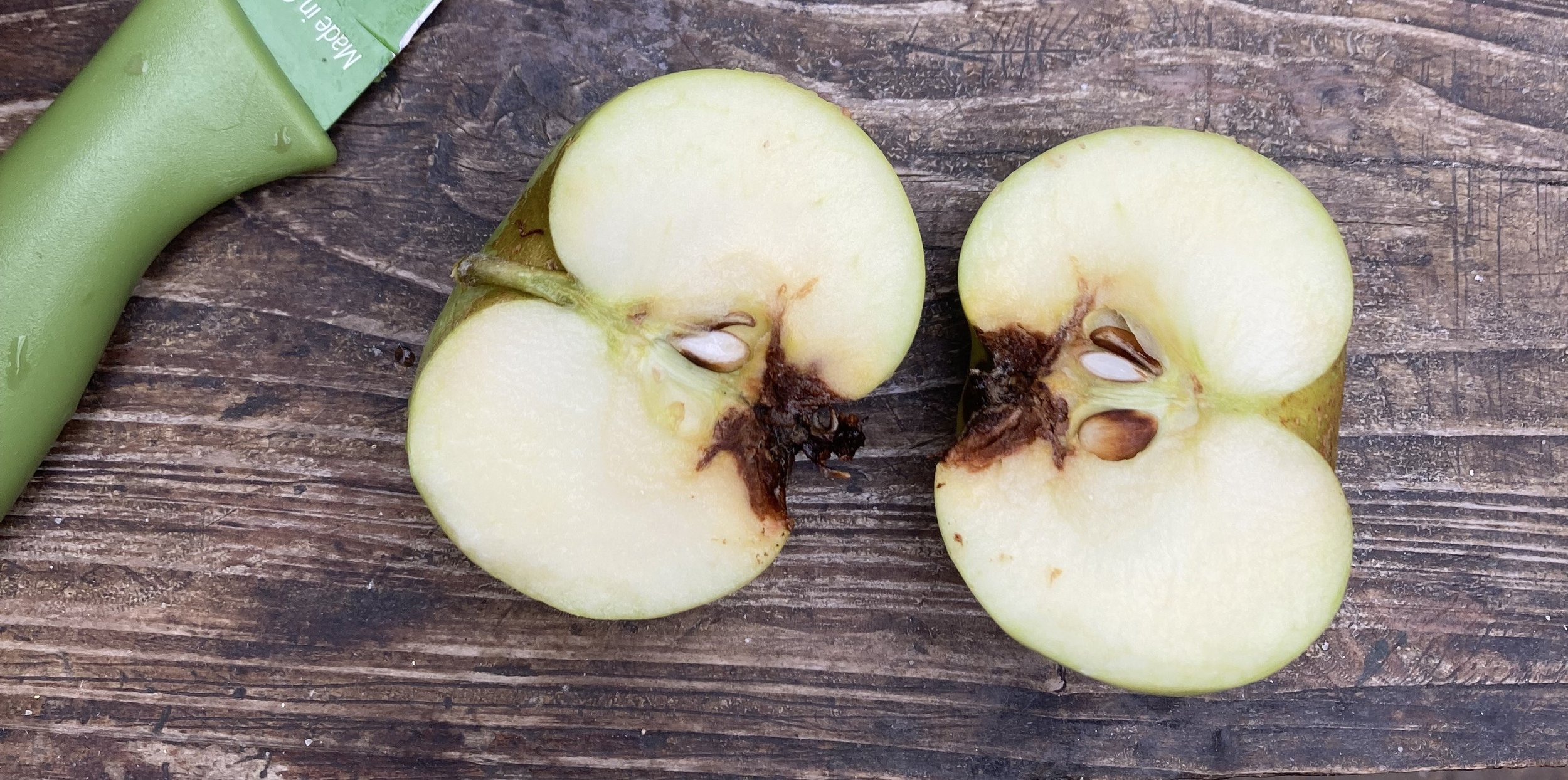
A farm apple cut in half resting on a wooden table. The apple is mostly blemish free apart from some damage to the base of its core.
When I’m forced to cut up the fruit I harvest- it makes me more likely to put it on a plate walk it around the farm to share with my colleagues. It also inspires me to cook, earlier in the month I used some of our Bramley apples to make a large apple crumble and to bulk up a jam recipe using farm plums.
There is more time needed when cooking or eating this shared fruit as you have to cut out the areas a bug has already claimed, but the flavour and quality are a massive reward. Windfall fruit such as this is often offered for free in the farm shop to whoever else wants to dedicate the time to it.
If moths want to eat my apples, that’s probably a good sign - besides, being a part of something’s second life always appealed to me, why should this be any different?
With all these thoughts of bugs buzzing around my head, I was eager to attend a workshop Hafsah had organised at the farm titled ‘reimagining our relationships with bugs’.
Jazmeen isa Qureshi, an interdisciplinary ecologist, led us in discussion around how we view bugs, ourselves, and the function of ‘queering’ our relationship to them.
Looking at the term Queer beyond meaning someone in the LGBTQI+ community but rather as a word describing someone/thing as ‘outside of’ the norm we can see that bugs are treated much the same as queer people are.
Long have the dehumanising tactics of colonialism used language associated with bugs to incite hate towards marginalised groups. And even our human beauty standards bleed into the world of bugs, how can it be that butterflies are admired by the same eyes that fear a moth. Some deemed acceptable, others not.
Something Jazmeen said summarised how I’ve been feeling very succinctly
‘I’m not going to treat you like a human, because you’re not one – but I’m not going to treat you like nothing either’
It feels particularly queer to accept something as valid before understanding it- having faith that you can do it that way round is a fundamental part of the solidarity you see between different parts of the queer community.
The evening of drawing parallels between the attitudes towards queerness and bugs led me to think - if we are striving for more than tolerance towards the queer community, and rather for integration- perhaps we should also seek the integration of our bugs.
Not to say I want a coddling moth larva in every apple, I don’t, and there’s plenty of organic methods which reduce pest damage to crops which we can and do implement on the farm.
But by not using pesticides to try and fix these issues, and by adhering to the other principles of organic growing, we protect the soil health, reduce various types of pollution and prevent damage to the beneficial organisms that help our crops grow. All these things help towards balancing our ecosystem and give us more consistent yields overtime*.
What’s deeply sad is that these benefits are diluted by larger systems (industrial agriculture, fossil fuel consumption etc.) which are damaging environment. This summer has been very difficult in the gardens, the heat and drought from countless heatwaves has put stress on every crop in some way, which makes them more susceptible to pest damage and disease.
It was very difficult to just write about the larvae in the apples without landing in my pit of fears around climate change, so in order to round this out I thought I’d share something that makes me hopeful.
I’m meeting more and more volunteers at the farm who exist outside of the farming community yet have decided to show up in order to learn about organic growing, ecology, permaculture and food security.
Seeing the wonder take over when they meet a crazy looking bug they’ve never seen before, restores my hope that society can shift towards protecting bugs and in turn, ourselves.
It is fundamental that places like this exist, where sharing - whether that be apples, knowledge or hope - is taken seriously.
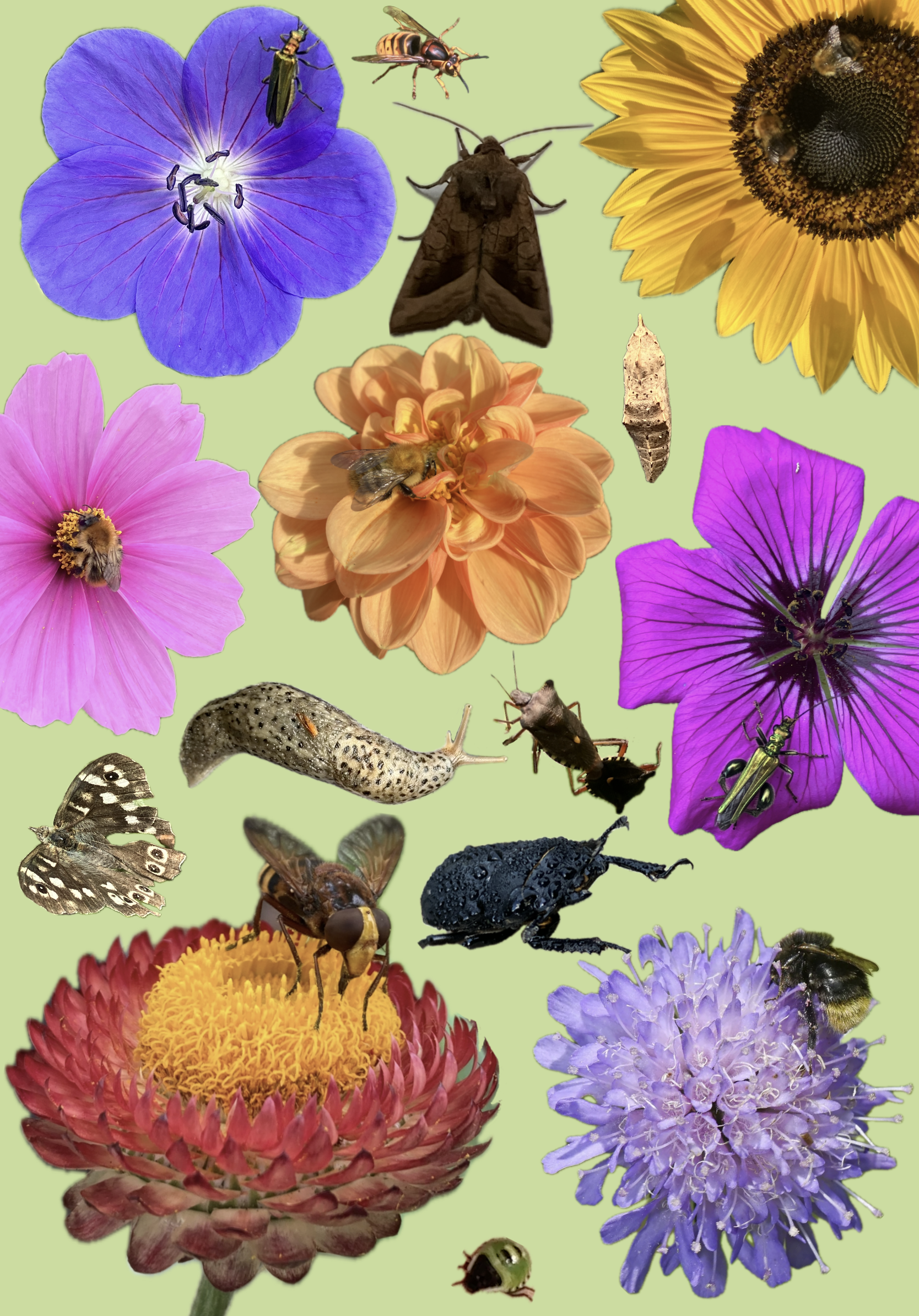
collage of photos of various bugs. bees, beetles, shield bugs, moths, butterflys a crysalis of some kind and a slug
Blog and photos/collage by Izzy
* Organic Farming vs Chemical Farming: A Comparative Study of Productivity and Environmental Effects